

Experience
Performance and Conducting
Musical Director 2014–Present
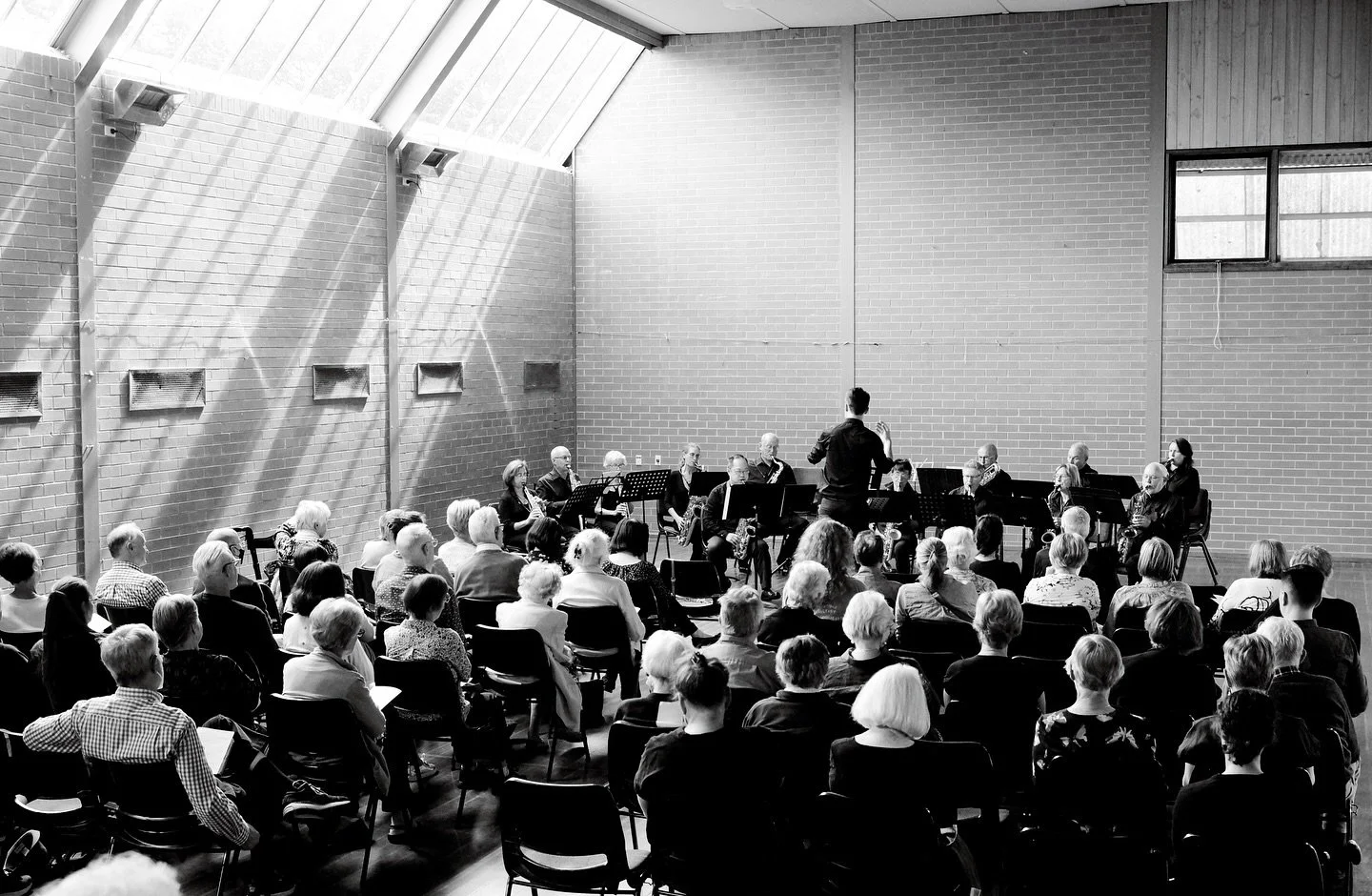
Clasax (Clarinet & Saxophone Society of Victoria) Saxophone Ensemble
Musician and Audio Engineer 2014–Present
Australian Army Band Melbourne
Freelance Saxophonist 2008–Present
Various commercial, community, and charity events
Musical Director 2012–18
Old Paradians’ Association
Musician 2009–14
4th/19th Prince of Wales’ Light Horse Regiment Band
Instrumental Pedagogy
Music Tutor 2008–Present
AMEB First to Eighth Grade Saxophone Examinations
VCE Music Repertoire Performance (Units 1–4)
Woodwind, Ensemble, Theory Tutor 2009–20
Parkville Music School
Saxophone and Clarinet Tutor 2012
Parade College
Saxophone and Ensemble Tutor 2009–12
Loyola College
Saxophone Tutor 2009
Trinity Grammar School

Music Research
Editorial Committee Member 2022–Present
Context Journal of Music Research
Editor 2024–25
Context Journal of Music Research
Guest Lecturer and Seminar Tutor 2021–2025
University of Melbourne
Presenter 2024
Musical Nationbuilding and Cultural Exchange in Interwar France and Australia Symposium, University of Melbourne
Presenter 2020–22, 2024
Musicological Society of Australia National Conference
Awardee 2023
Conservatorium Director’s Award for Exceptional Doctoral Research, University of Melbourne
Publications
Research Articles
• “‘Ali Ben Sou Alle” and the Saxophone in Australia, 1852–55’, Nineteenth-Century Music Review 23, no. 1 (2026): 133–55. doi.org/10.1017/S1479409825100566
• ‘“The Event of the Age”: Appraising the Sousa Band’s 1911 Australasian Tour’, Musicology Australia 46, no. 1 (2024): 23–46. doi.org/10.1080/08145857.2024.2366042
Book Reviews
• ‘Bands in American Musical History: Inflection Points and Reappraisals’, edited by Bryan Proksch and George Foreman (Rochester, NY: University of Rochester Press, 2024). Musicology Australia 47, no. 2 (2025): 311–13. doi.org/10.1080/08145857.2025.2586728
• Paul Watt, ‘Music, Morality, and Social Reform in Nineteenth-Century Britain’ (Woodbridge: Boydell Press, 2023). Context Journal of Music Research 50 (2024): 127–30. doi.org/10.46580/cx85394
Journal Issue (as Editor)
• Context Journal of Music Research 50 (2024). contextjournal.music.unimelb.edu.au/context-no-50-2024
Availability
Ross currently has limited availability for studio saxophone lessons, for students of all ages (9+) and backgrounds.
Testimonials
Ross has been an extraordinary saxophone teacher for our son, and I'm truly in awe of Ross' skill and knowledge.
I’m immensely proud of the progress our son has made in four years of lessons with Ross. We have watched and listened to him develop stylistically, technically, and in his approach to practising and performing.
Ross has a calm, upbeat approach that has made every step of the journey enjoyable and encouraging. I’m deeply grateful that Ross joined our son’s musical path when he did.
– Hayden, Glen Iris
Ross has been teaching my 12-year-old son saxophone for two years, and we feel extremely privileged to have Ross as a teacher. Not only has Ross helped my son dramatically improve his technical skills, but he has also instilled a real love for playing, and a confidence to explore his own musical creativity.
In addition, the preparation that Ross provided for my son's AMEB exam was exceptional, allowing my son to perform extremely well and thereby further increase his confidence and self-belief.
– Anna, Ashburton
I never cease to be amazed at what Ross gets out of us at rehearsals, despite our very different levels of competence and musicality – and, I am sure, without anybody ever feeling put down. Ross always finds interesting music for us to play, and gives the distinct impression of really enjoying it. His enthusiasm is always infectious.
– Barrie, Fitzroy North
So, liminaire?
In Les Rites de Passage (1909), ethnographer Arnold van Gennep coined three phases of a rite of passage: the preliminaire, the liminaire, and the post-liminaire. The liminaire phase, derived from the Latin limes (threshold), describes life at the margins: a place of ambiguity, or as anthropologist Victor Turner described in The Ritual Process (1969), ‘betwixt and between the positions assigned and arrayed by law, custom, convention, and ceremony’.
In many ways, liminaire aptly describes the saxophone’s place in music, culture, and society: it is often found at the periphery of orchestras and bands, or otherwise reduced to a narrow popular stereotype. The strictures of this frame, and wealth of evidence to the contrary, animated Ross’ award-winning PhD exploring the early history of the saxophone in Australia, which analysed its reception from the gold rush to the Jazz Age and beyond (2023).
Beyond research, this idea can be positively applied to music performance and education. Whether contributing to events great and small, programming and leading concerts that traverse stylistic markers, or designing and facilitating studio saxophone lessons infused by a diverse a range of musical and contextual influences, Ross can help your musical endeavours cross their next threshold.